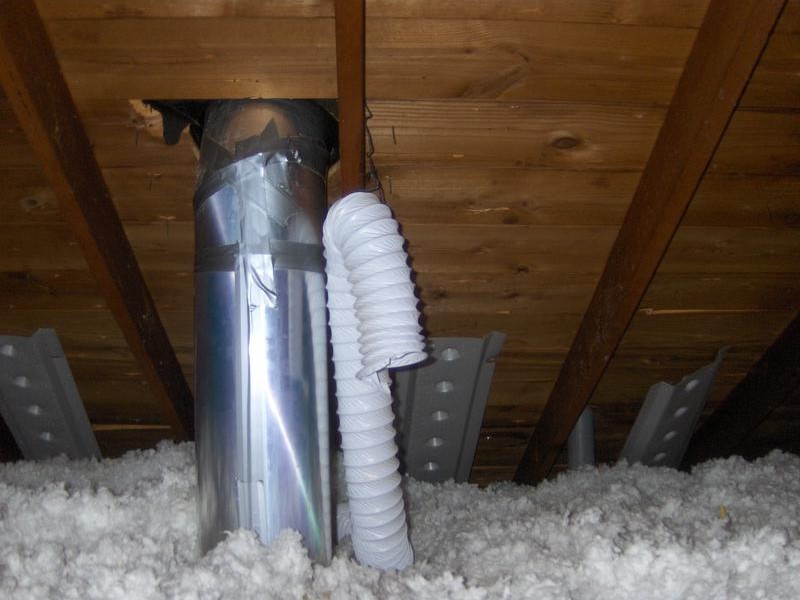
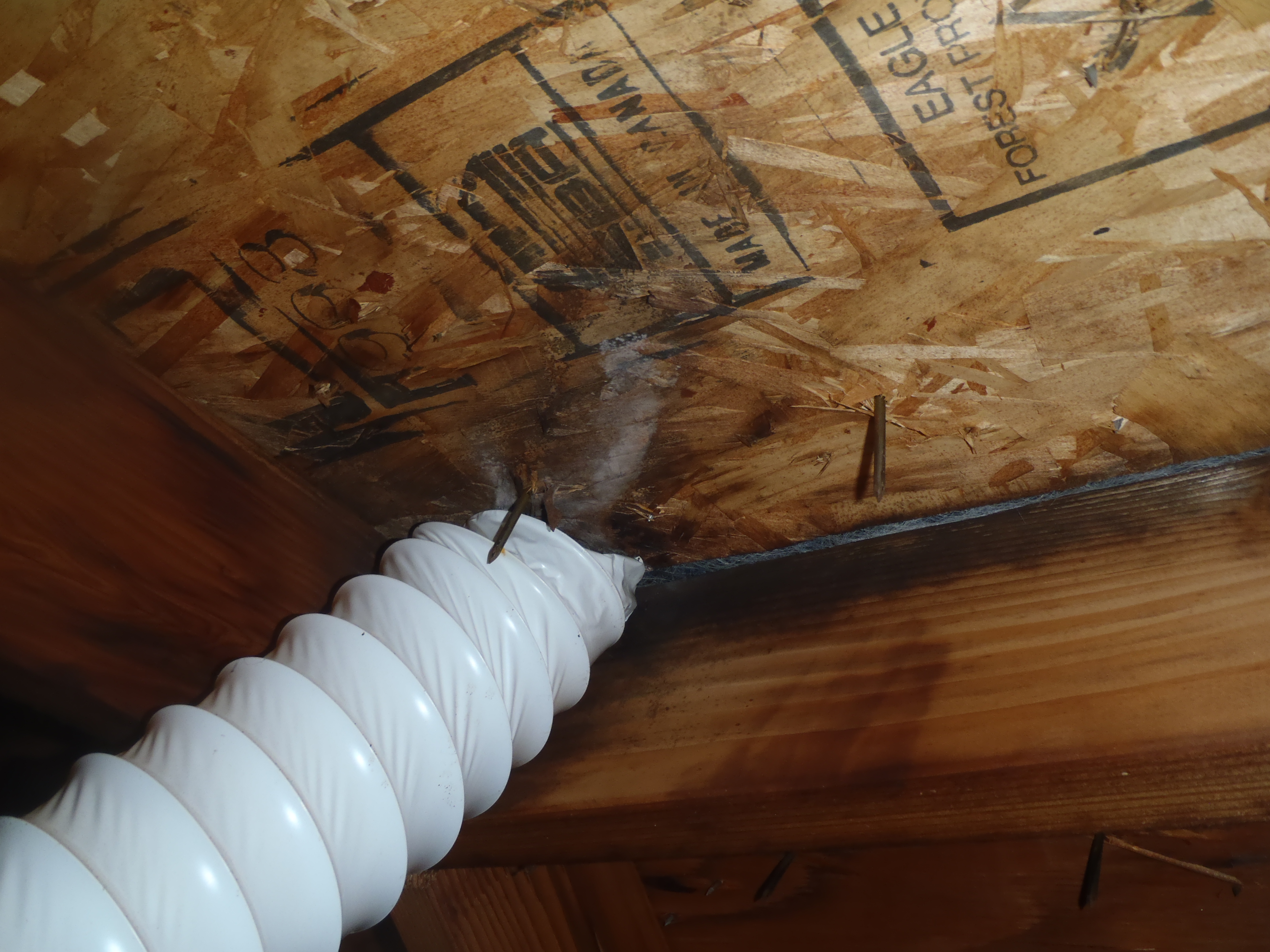
Can I Vent A Bathroom Fan Into My Attic? No, you should not vent a bathroom fan directly into an attic. The problem with venting into the attic is that the moisture-rich air may form droplets on the wood sheathing, insulation, rafters, and ceiling joists, leading to mold growth. In addition, the excess moisture in the attic may also lead to wood rot, wood degradation, and may even cause a roof.
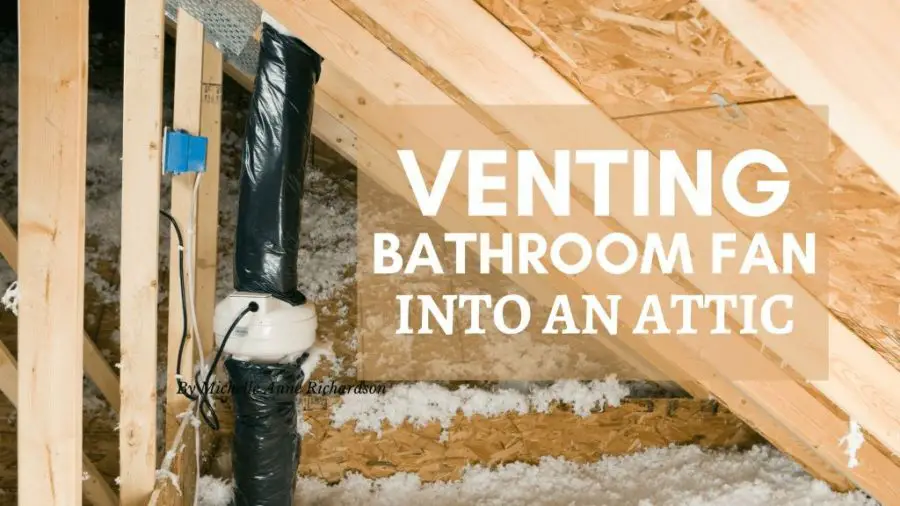
Traditionally, bathroom exhaust fans vented directly to the exterior through a roof or wall vent. However, in certain circumstances, venting into the attic may be considered. Can A Bathroom Fan Be Vented Within An Attic? The answer to that question would be a 'no.' a bathroom fan should never be vented into an attic directly.
How to Vent a Bathroom Fan Into An Attic Properly (Complete Guide)
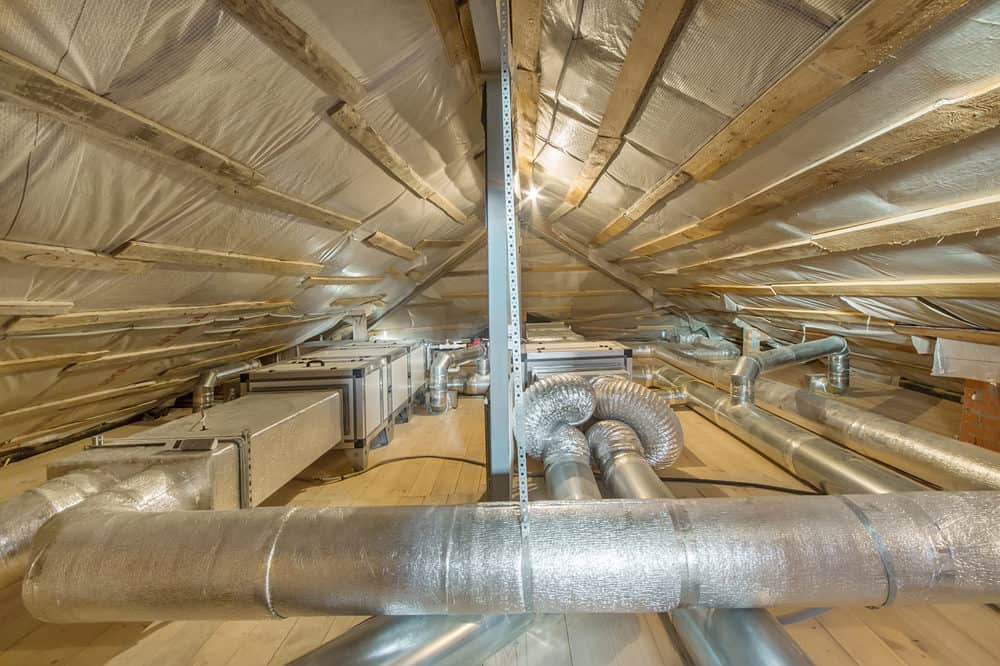
On the other hand, it is possible to vent a bathroom fan through the attic, as it terminates on the gable end or the roof. Even though it might seem like a simple solution, just leave the bathroom vent hose in the attic, since it is all. Bathroom exhaust fans perform an important function by removing excess moisture from your home.

When venting a bathroom exhaust fan, make sure to vent the air to the outside rather than into your attic, where it can cause mold and mildew to form. In another case, a homeowner chose to vent their bathroom exhaust fan through a soffit without considering the design of the vent. As a result, the warm, moist air was forced back into the attic, leading to condensation and mold growth.

How to Vent a Bathroom Fan Into An Attic Properly (Complete Guide)
It took a professional inspection to identify the issue and reroute the vent properly. Venting a bathroom fan into the attic may seem like a cost-effective option when venting a bathroom, but it can be more problematic than you might think. When moisture from a steamy and humid shower ventilates directly into an attic, it can drastically increase humidity levels and in turn, cause mold and mildew to form.

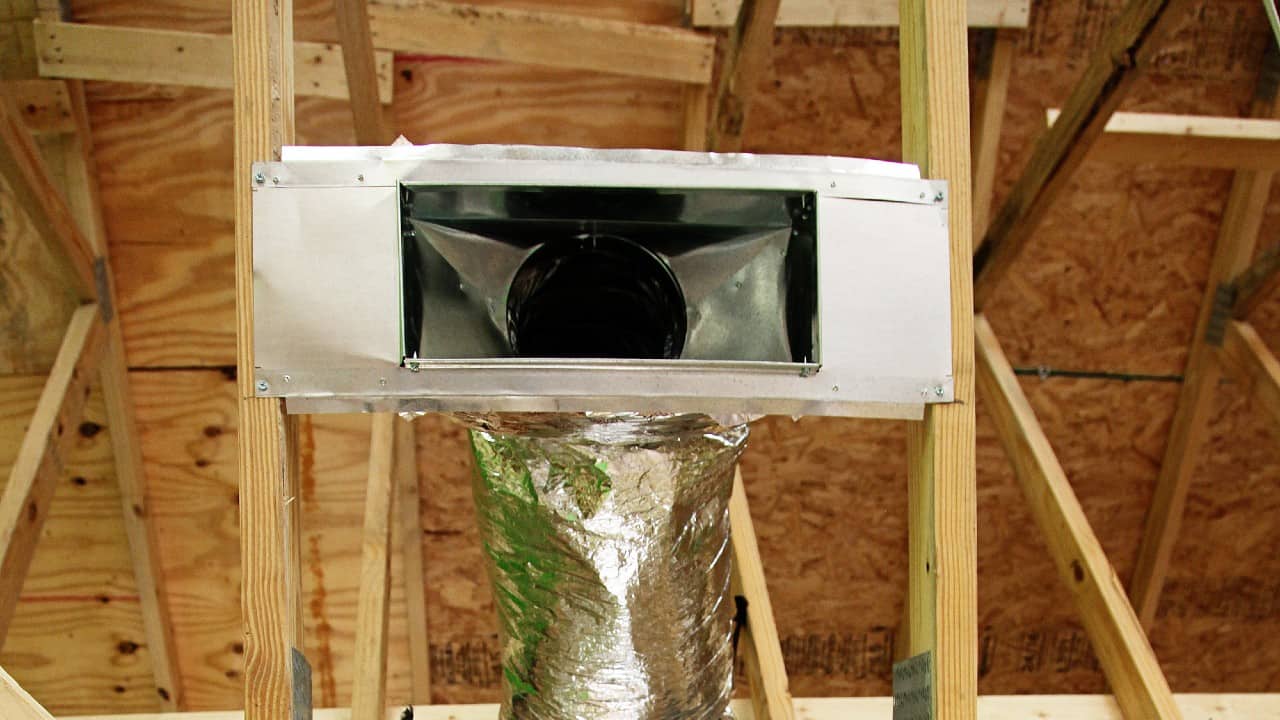
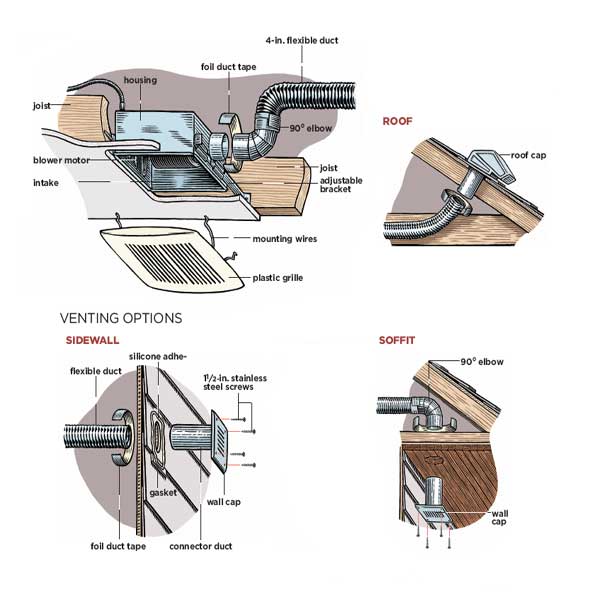
Part of the problem was that the bath fans vented to the attic. Where should duct go? A duct on a bathroom exhaust fan needs to terminate so that the exhaust air goes all the way to the outdoors. That could be through a roof, a gable end, or a soffit.
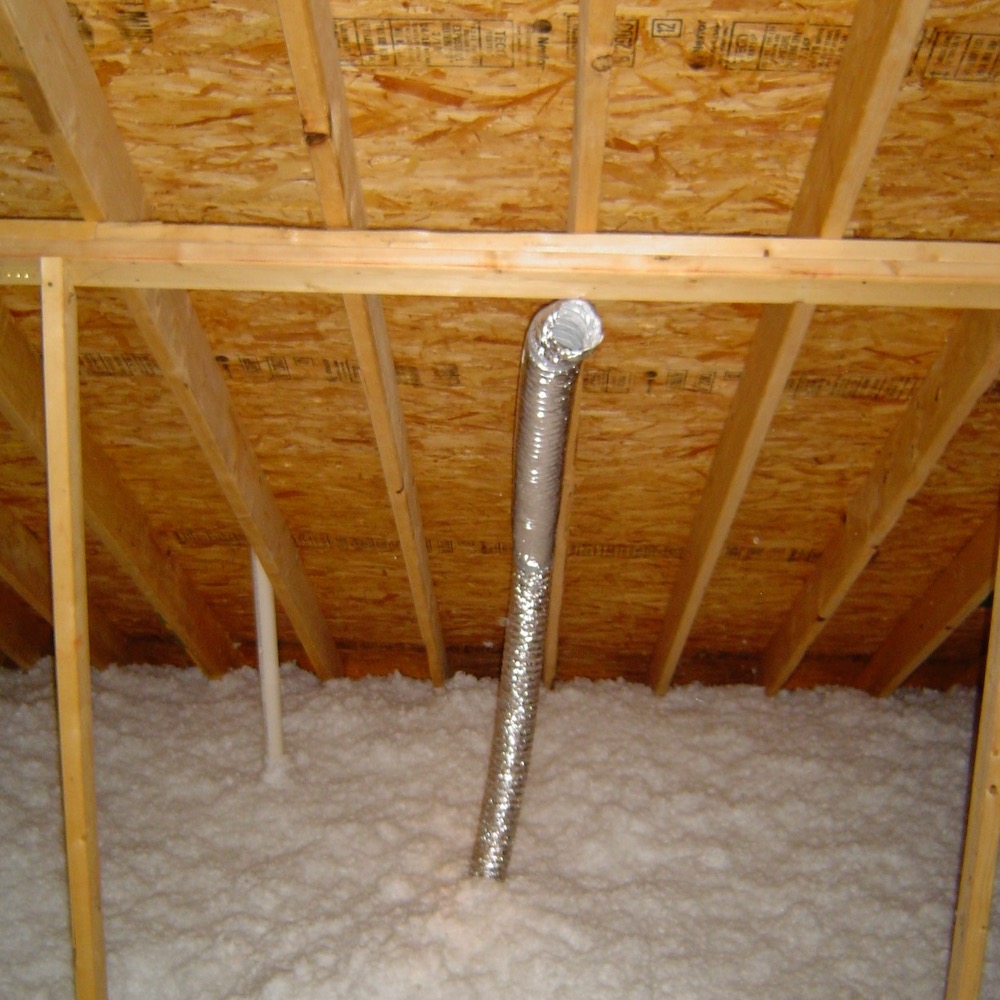
Installing a Bathroom Fan - Fine Homebuilding
At some point in the 1990s, building codes changed, and bathroom fans were required to vent to the exterior of the home. The requirements for bathroom venting have continued to evolve. The following photo shows moisture damage from an exhaust fan venting into the attic space near the soffit.

A bathroom vent fan is a mechanical exhaust system that moves up to 130 cubic feet of warm moist air. The bathroom air must vent outside to prevent ceiling joists and drywall damage. You should not vent a bathroom fan into an interior space, including the attic, wall or ceiling cavity, or crawl space.

What's the best way to remove moisture from a bathroom? We discuss everything you need to know about venting a bathroom fan into an attic.