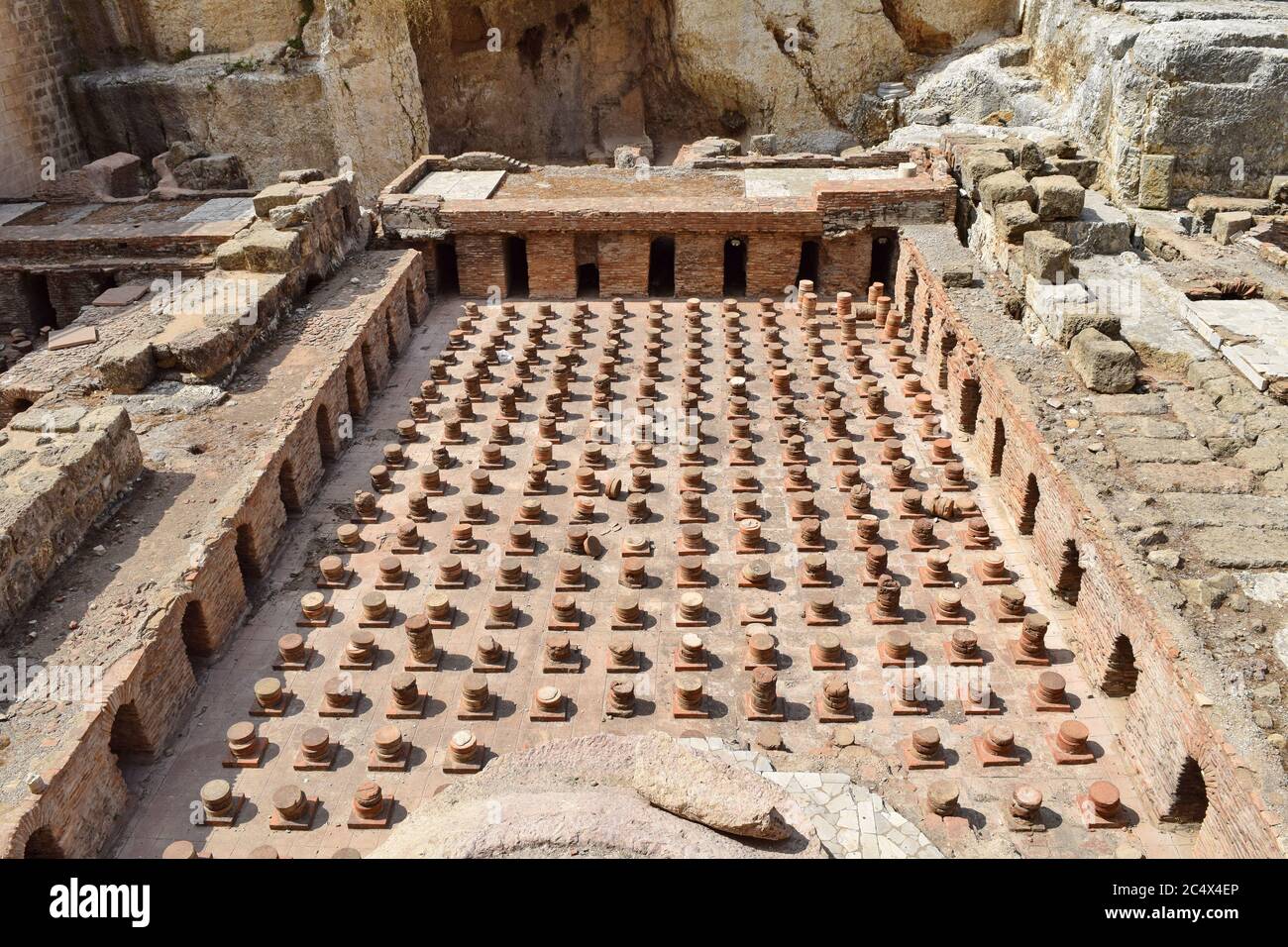
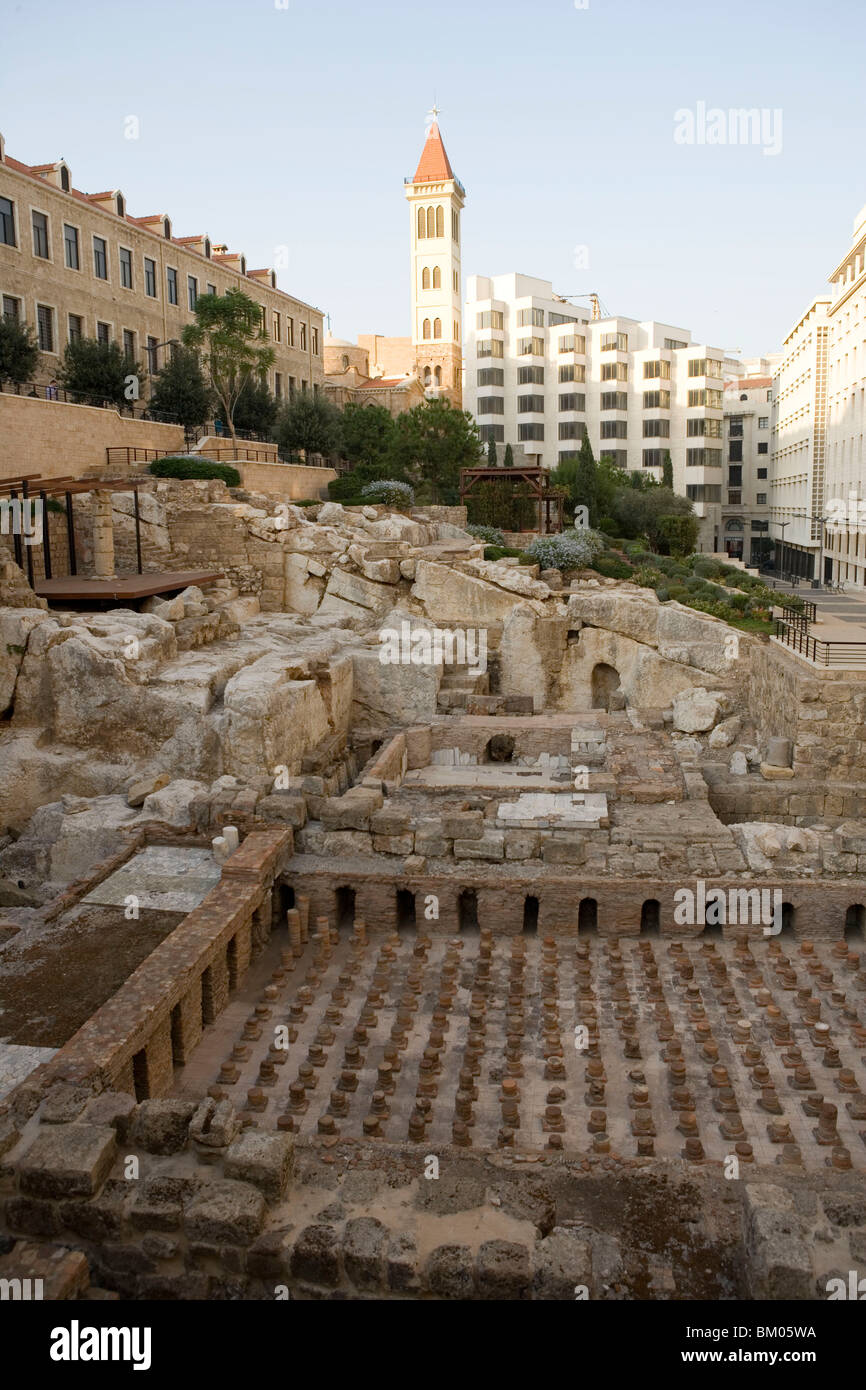
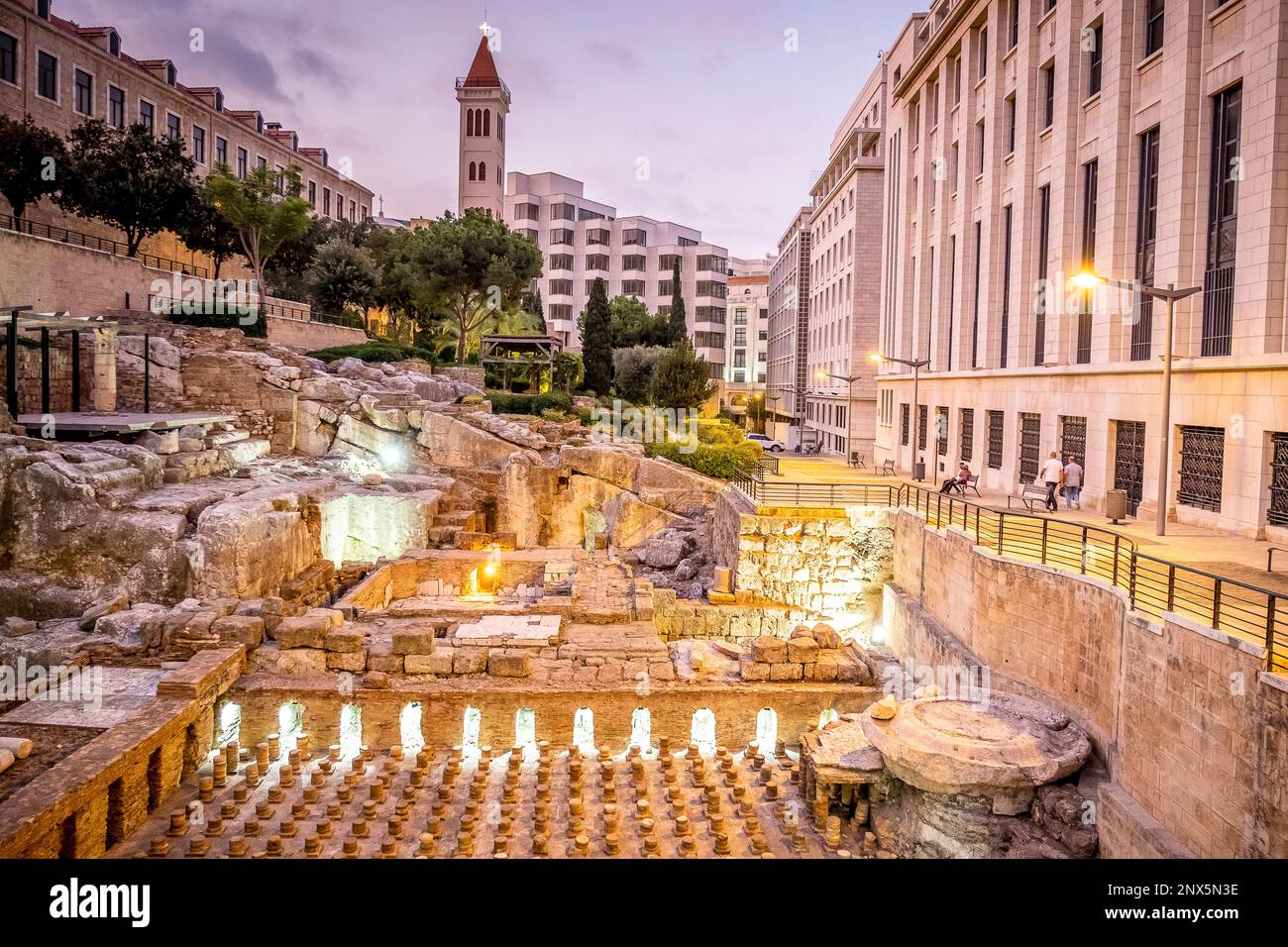
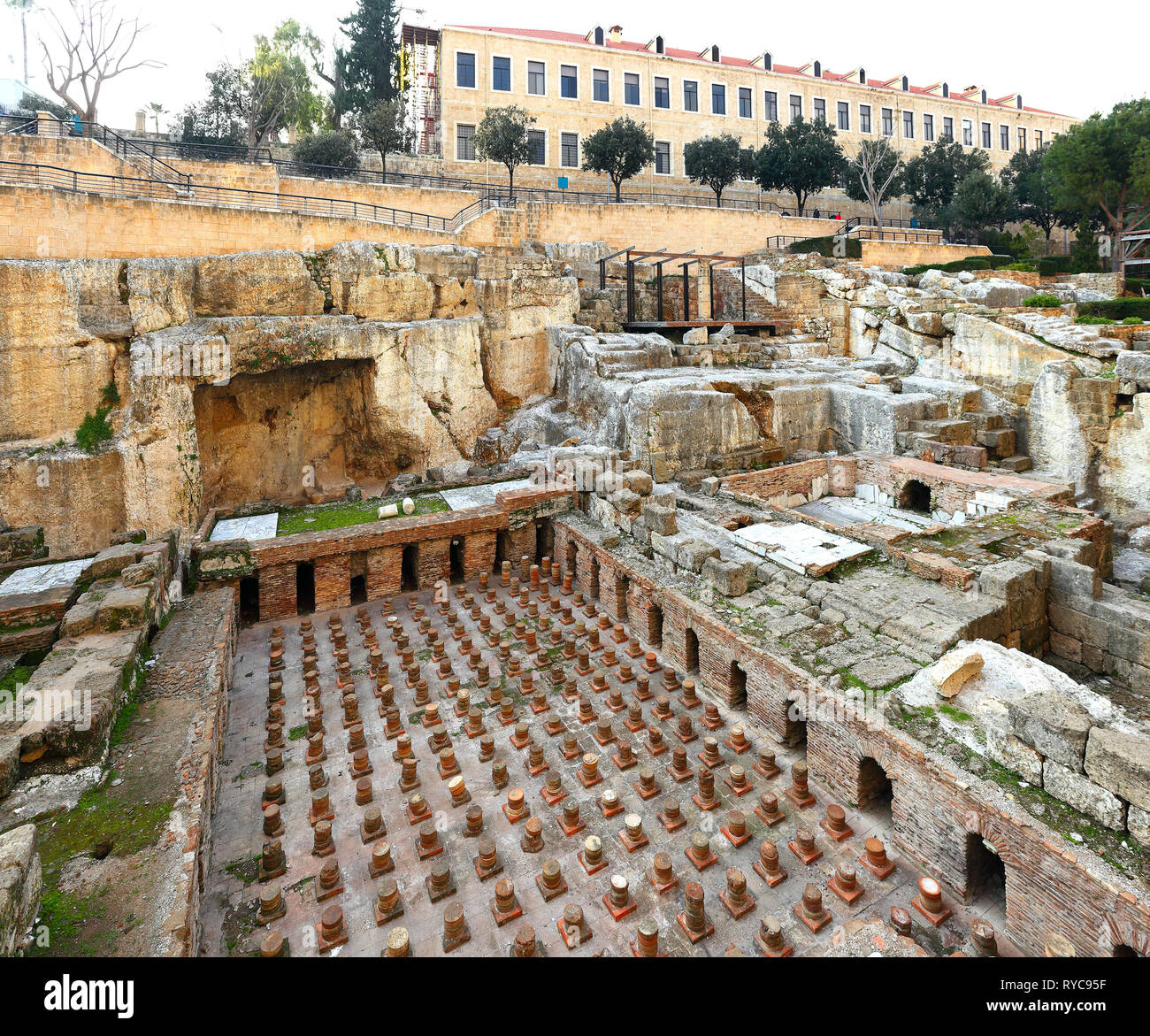
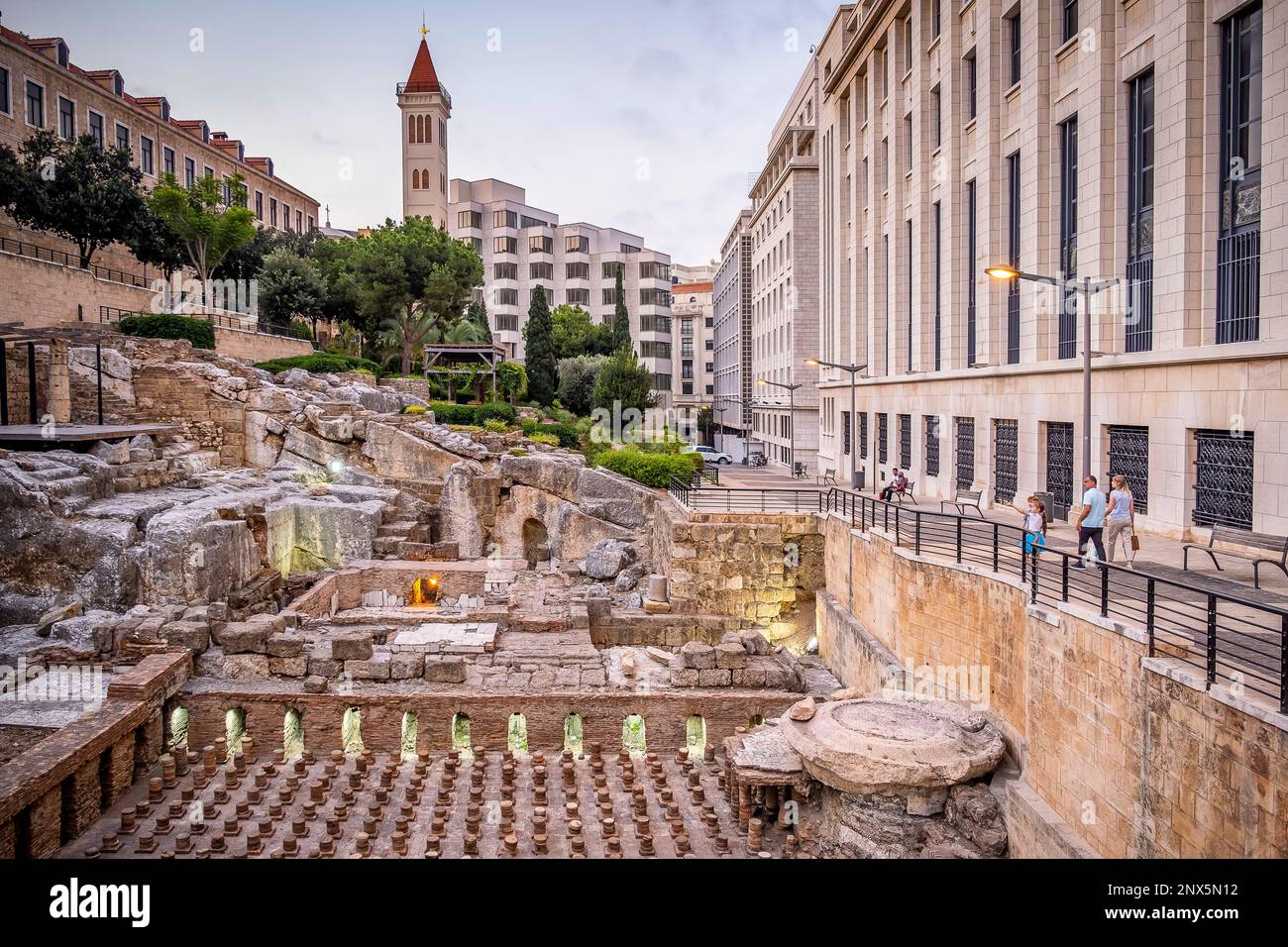
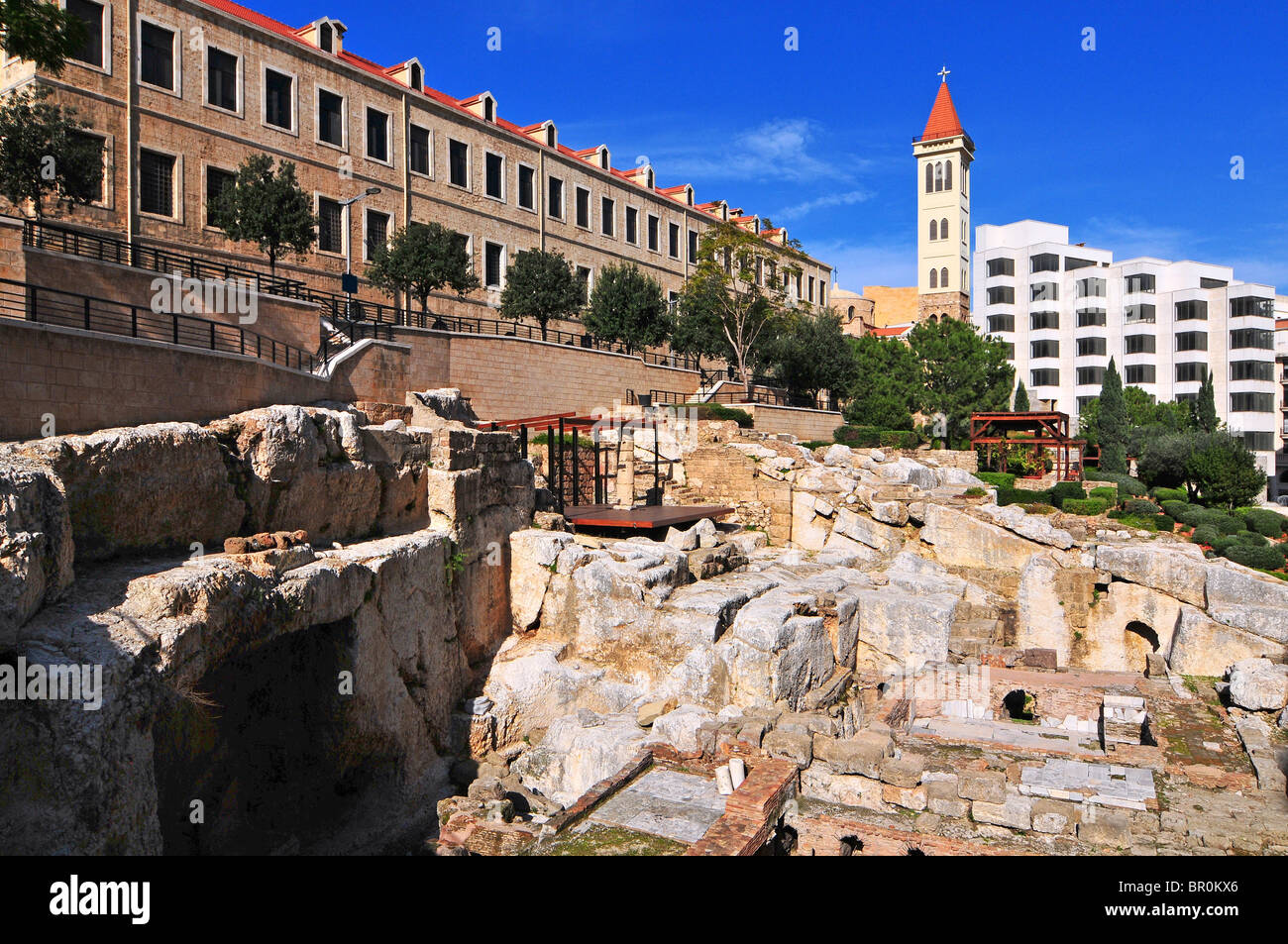
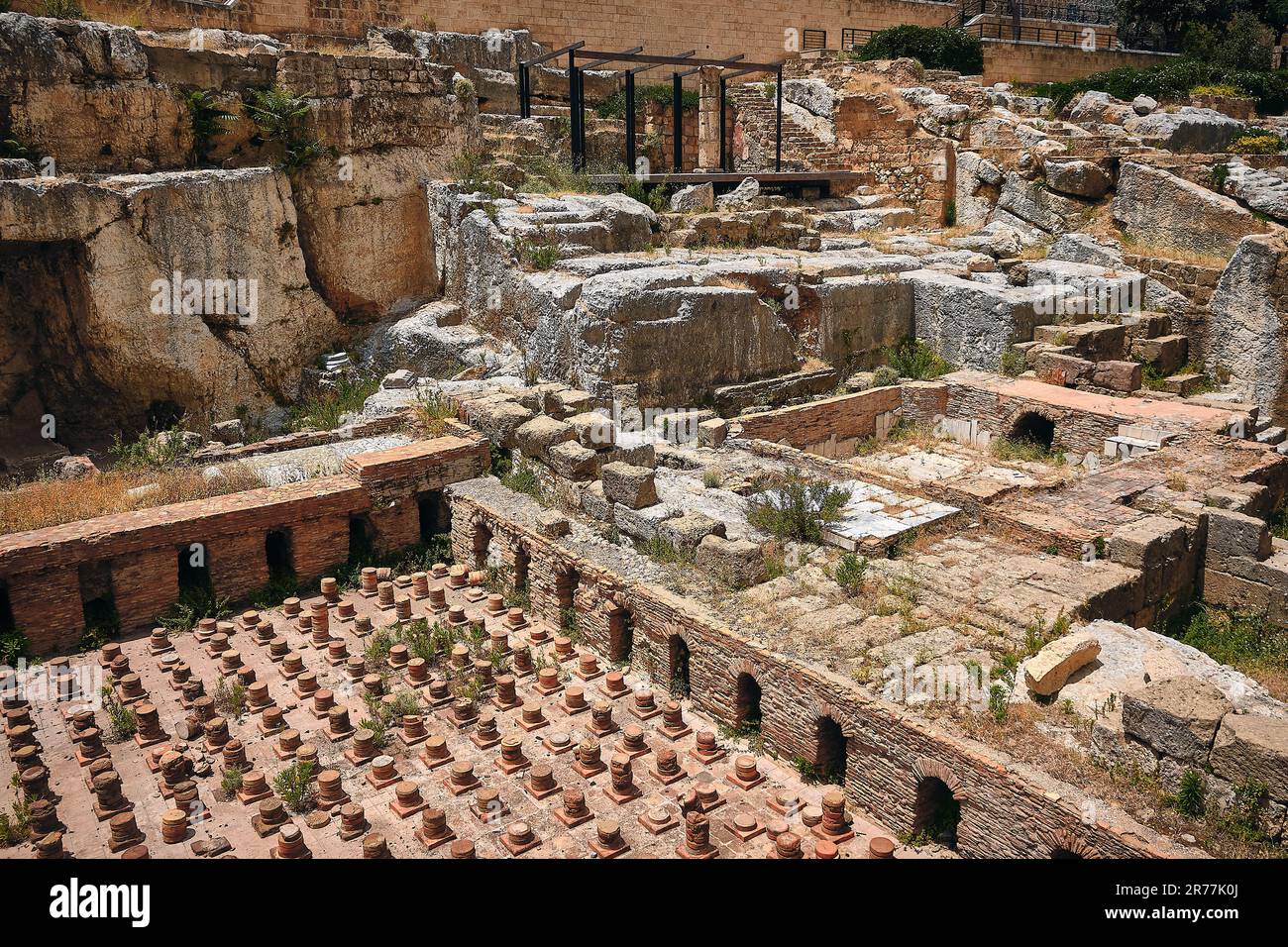
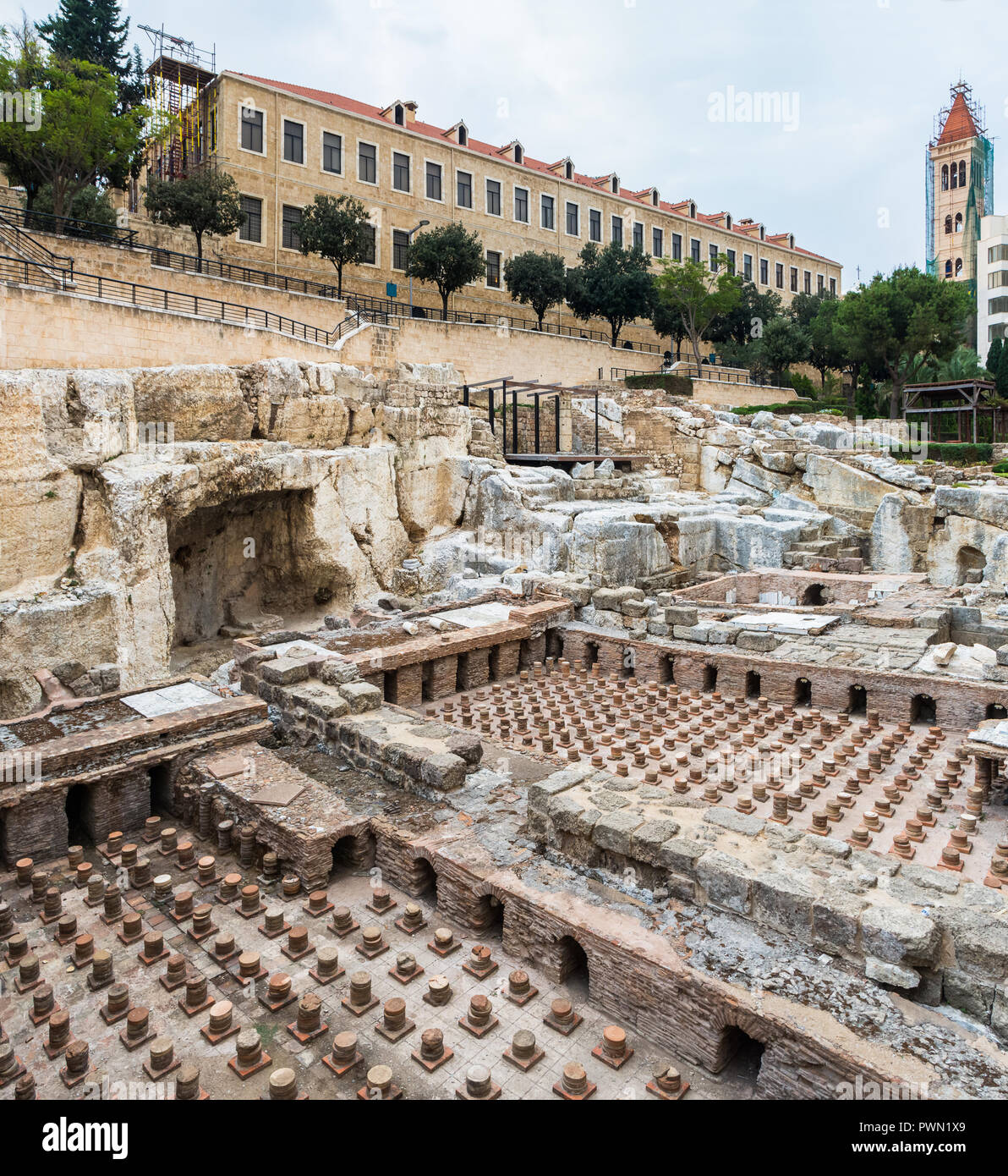
The Roman Berytus (Roman Baths) are located in the middle of downtown Beirut, Lebanon between Banks Street and Capuchin Street. [1] The remains of a Roman bath of Berytus now surrounded by government buildings were found and conserved for posterity. The Romans constructed an aqueduct fed by the Beirut River, whose main source was located 10 km (6.2 mi) from the city.
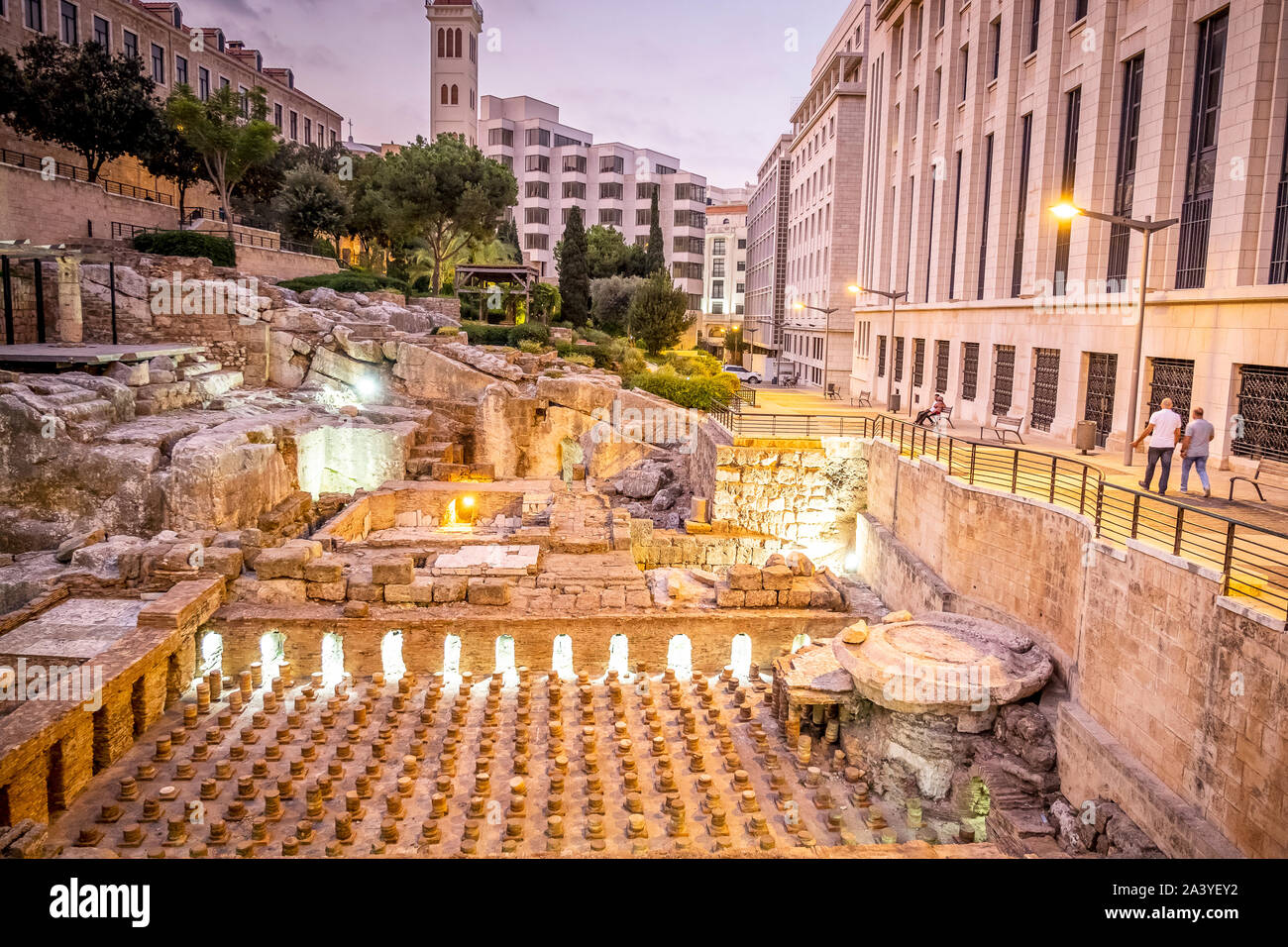
When the water reached Riad Al Solh Square, it was stored in large cisterns and then distributed to the pools of the Roman Baths. The cisterns were built in order to store water for a city of nearly 50,000 inhabitants and in the Roman centuries this was a big engineering. The "Roman Baths" is a landscaped public space that lies on the eastern slope of the Serail Hill.

Downtown Beirut, Ruins of ancient Roman Baths, Lebanon Stock Photo ...
It consists of a garden and a set of uncovered ruins of ancient Roman baths, hence the name of the place. Originally discovered in 1968-69, the ruins underwent a thorough cleaning and further excavation in 1995. Behind Banks street are remains of the Roman Baths which once served the city's population.
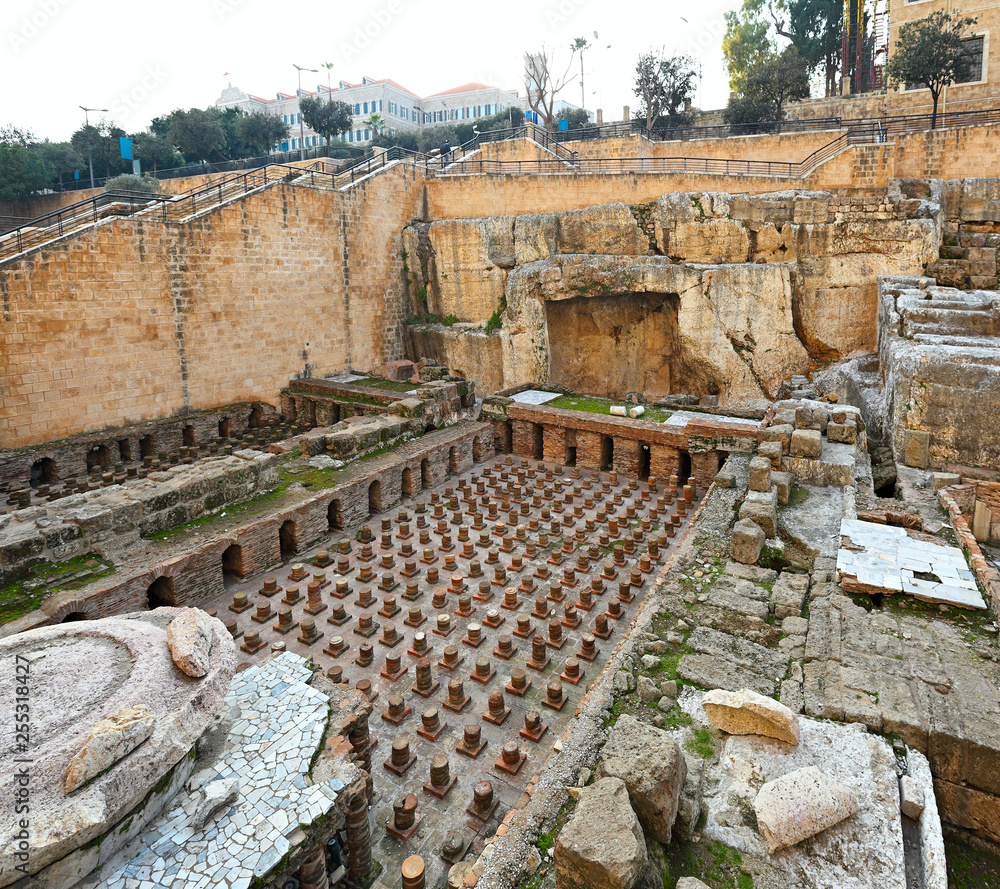
Originally discovered in 1968-69, it underwent a thorough cleaning and further excavation in 1995. Beirut Roman Baths Solidere is regenerating the Beirut Central District with a Master Plan designed to heal the deconstruction of the war, preserve cultural heritage, and reinvigorate the city center by emphasizing public space and street life. 1.
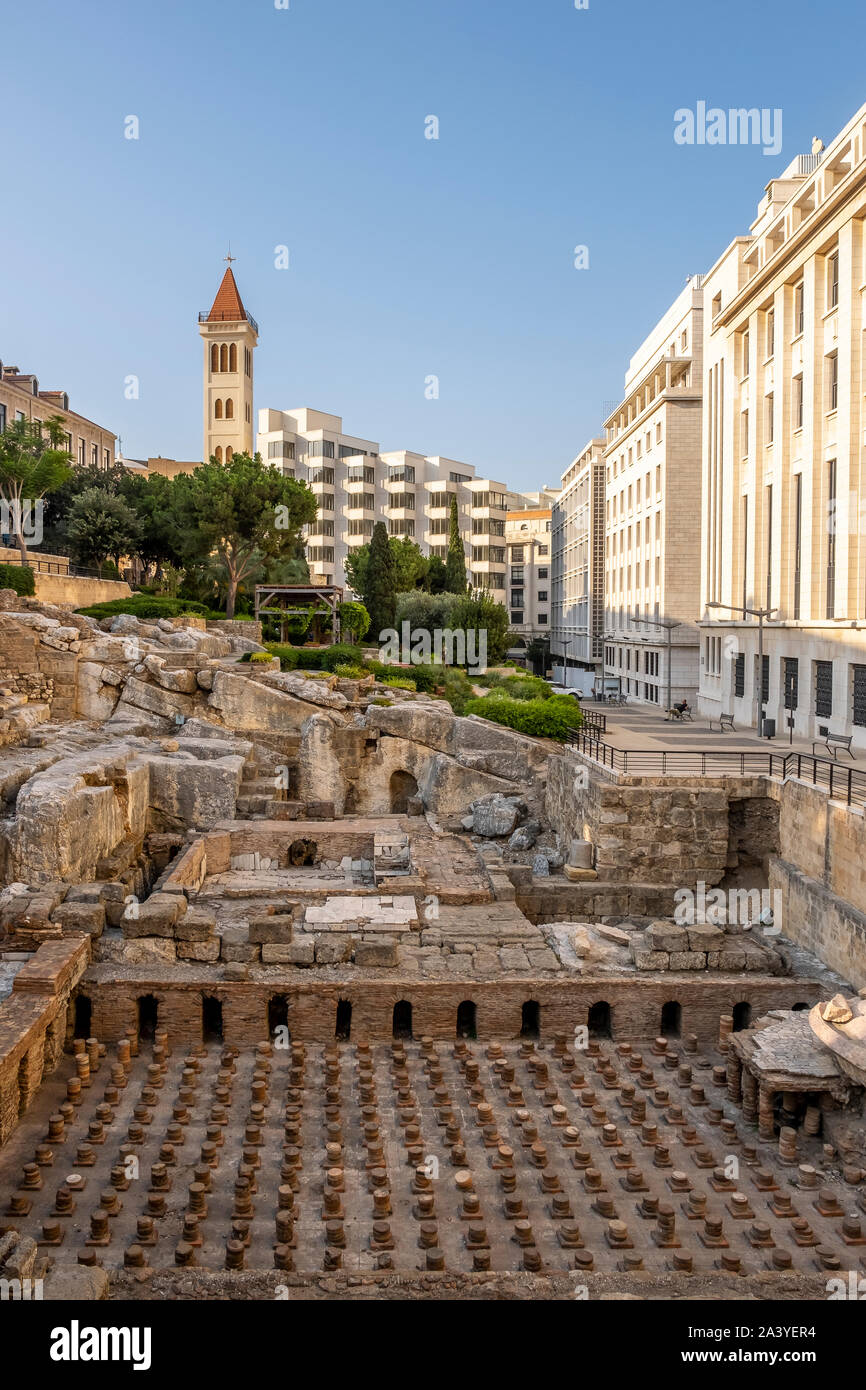
Roman Baths, Downtown Beirut, Lebanon Stock Photo - Alamy
Thermae -- Large Roman bathing establishments characterised by their social role, which embraced functions aside those of simply bathing. Libraries were often accommodated within their precincts, as at the Baths of Caracalla, for example. Thermae were owned and operated by the city or the state and were open to all.
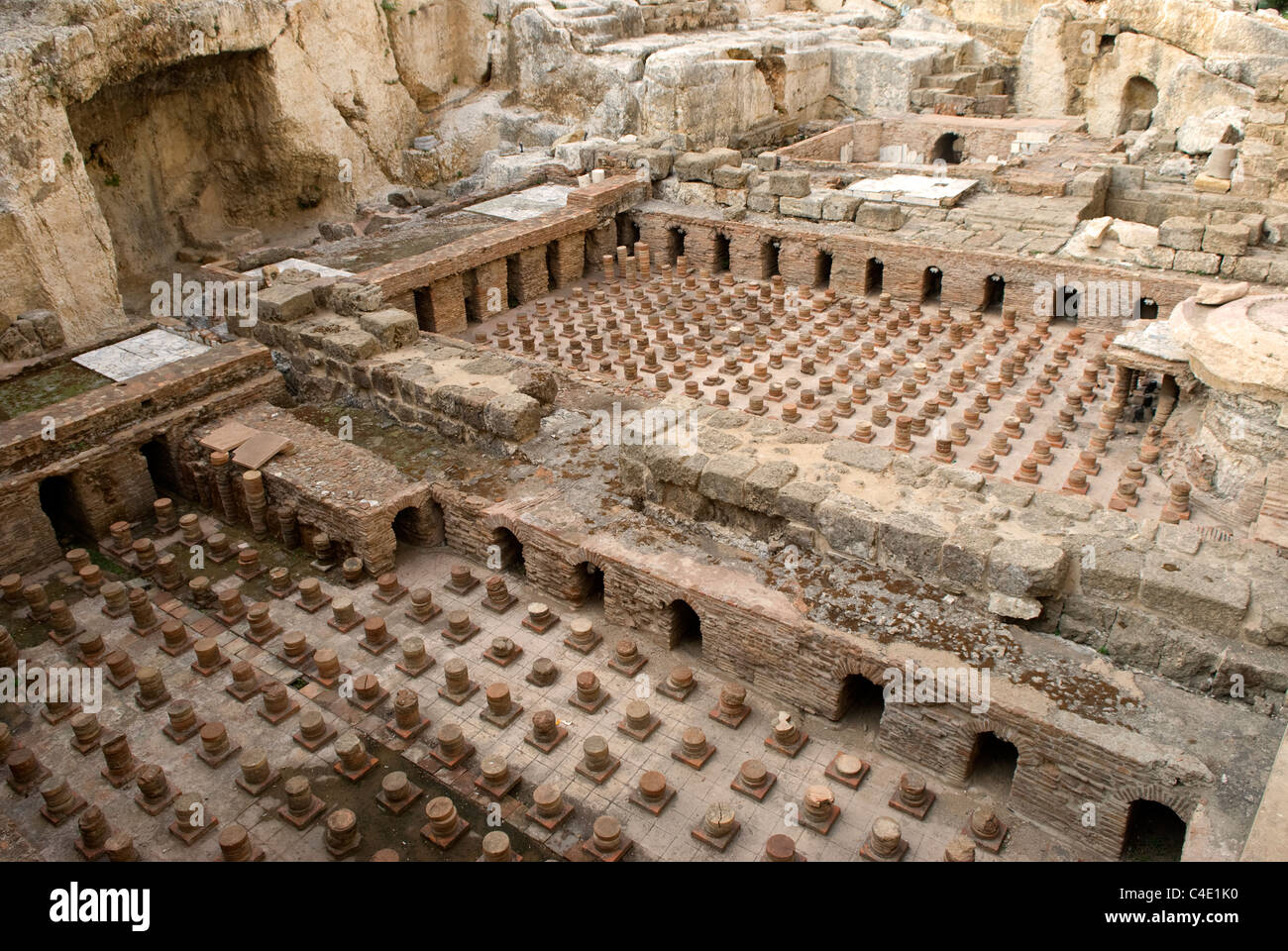
Imperial Thermae (as defined by Daniel Krencker 1929) were formal and. Roman ruins in the Roman Baths Garden General view of the Roman Baths Garden Recently at the Garden of Forgiveness, the two main streets of Roman Berytus, the cardo and decumanus, were discovered in the Beirut Central District. Their shaded colonnades became busy markets on festival days.
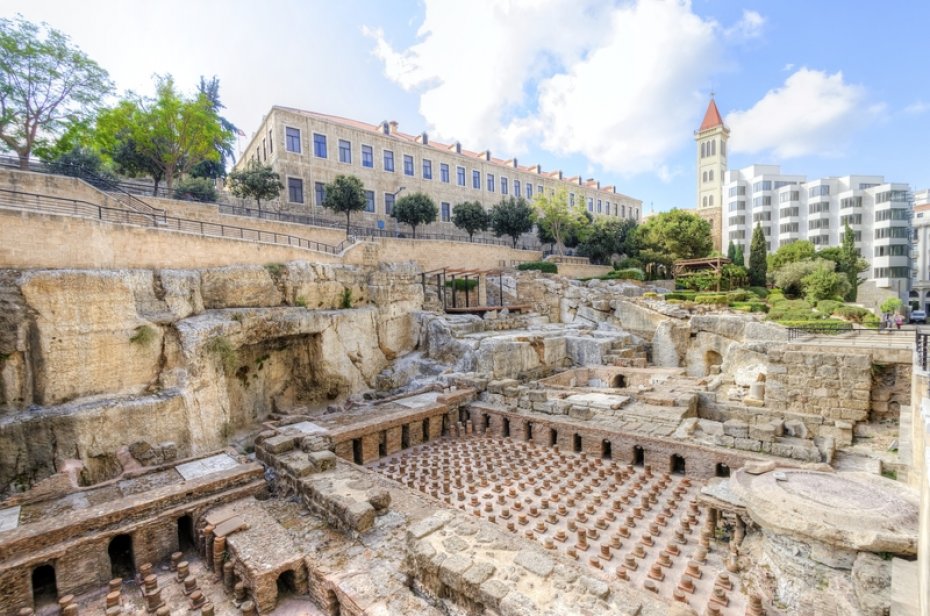
Roman Berytus (Roman Baths) ruins in downtown Beirut Central District ...
At other times, these streets would have been frequented by Law School students and citizens passing to. The Roman Baths of Beirut reveal the ancient city's rich Roman heritage through well. Roman Baths - Downtown Beirut In old Beirut, bathhouses were not something new at all, and public baths continued to exist throughout the ages in walled Beirut throughout the Ottoman period to the French mandate, there were public baths for families to go to until when the bathrooms began to be part of homes in new constructions.
You can find the Roman baths in Beirut in between Capuchins street and Riad el Solh. There are several pedestrian.