In the realm of heat treatment processes, the salt bath heat treatment method has emerged as a reliable and efficient technique. This article aims to shed light on the working principle, types, advantages, disadvantages, and applications of salt bath heat treatment. Let's dive into the world of this fascinating process.

Heat Treat Today's Technical Tuesday feature provides an overview of the heat treatment process and the benefits wrought from heat treating in salt baths. The article also illuminates details to understand part composition and the austempering and quenching process as a whole. Heat Treat with Salt Baths Salt bath heat treatment is a heat treatment process comprising an immersion of the treated part into a molten salt or salts mixture.2 There are numerous benefits of heat treatment in salt baths; the most prevalent is that they provide faster heating.

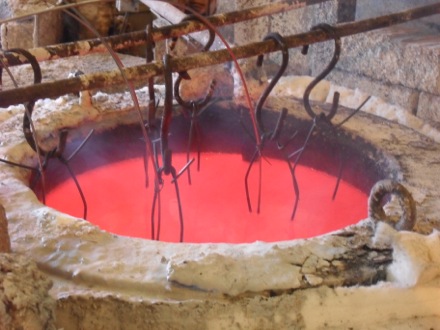
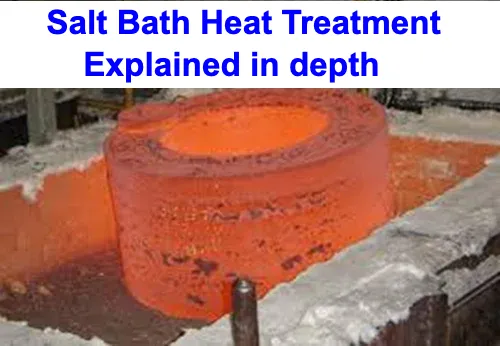
Heat treating an anvil sleeve molten salt quenching bath - YouTube
Salt Bath Heat Treatment: Process, Applications and Advantages Salt bath heat treatment is a specialized thermal processing technique widely used in the metallurgical industry for improving the mechanical and physical properties of metals. Unlike conventional air or gas furnaces, salt baths offer uniform heating, rapid thermal transfer, and reduced oxidation, making them particularly suitable. At the turn of the 20th century, the use of molten salt as a heating and quenching medium for steels was developed in England.

It rapidly came into use in Europe as a low-cost method of heat treating. Equipment was inexpensive, and molten salt provided a reproducible method of heat treatment. In this short article I will review the types of salts used for heat treating and some hazards.

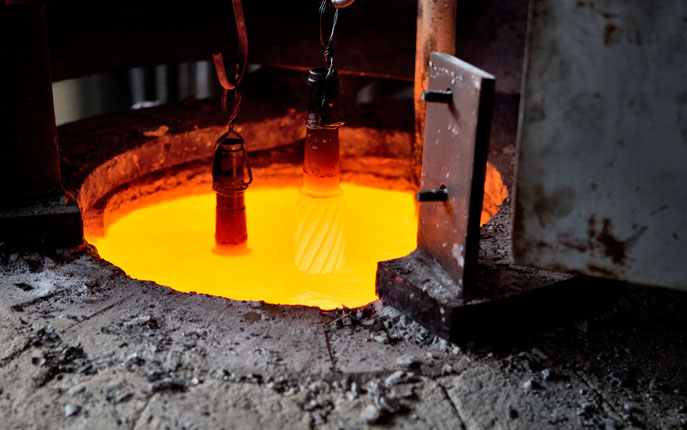
Salt Bath Heat Treatment Services for D2, D3, D6 A2 and H Grade Steel ...
Salt bath hardening is a popular process for components having a complex shape and varying widely in cross-section and weight. This may include, for instance, shafts, gear wheels, or tools. For such components partial hardening can be used to harden different areas to various levels of hardness.

This can be accomplished through heat treatment in a salt melt. What is more, the slow quenching. The Benefits of Salt Quenching for Alloy Steel Many of the same benefits derived by heat-treating HSS in molten salts apply to processing tool steel and alloy steel products in salts.
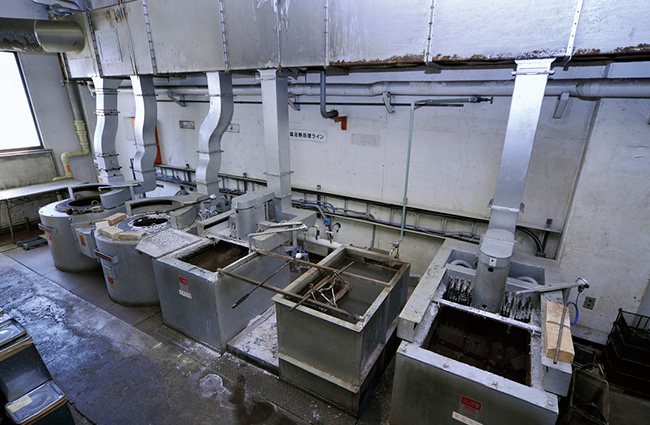
Heat treatment - TAKAHIRO ENGINEERING WORKS LTD.
For example, increased toughness can be obtained by quenching into salt, rather than oil. This article provides information on the salt baths used for a variety of heat treatments, including heating, quenching, interrupted quenching (austempering and martempering), case hardening, and tempering. It describes two general types of salt bath systems for steel hardening: the first type uses atmosphere austenitizing followed by salt quench and the second type employs austenitizing salt.
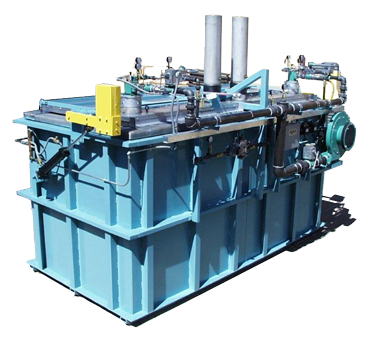
A work part immersed into a molten salt is heated by heat transferred by conduction (combined with convection) through the liquid media (salt bath). The heat transfer rate in a liquid media is much greater than that in other heating mechanisms: radiation, convection through a gas (e.g., air). Controlled cooling conditions during quenching.
The uniformity of salt bath heating and quenching results in more predictable post-hardening size changes than other heating and quench cooling procedures. According to D. Scott MacKenzie, Ph.D., FASM, a research scientist of metallurgy at Houghton International, "Since metals have high thermal conductivity, the core of the part lags the.