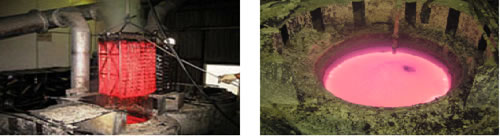
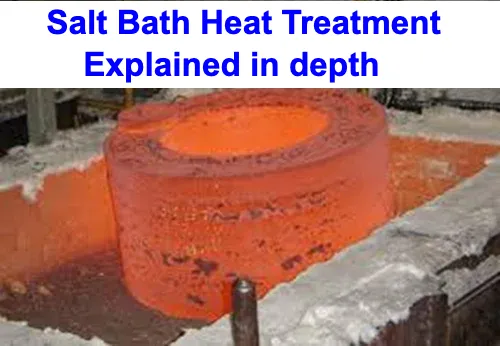
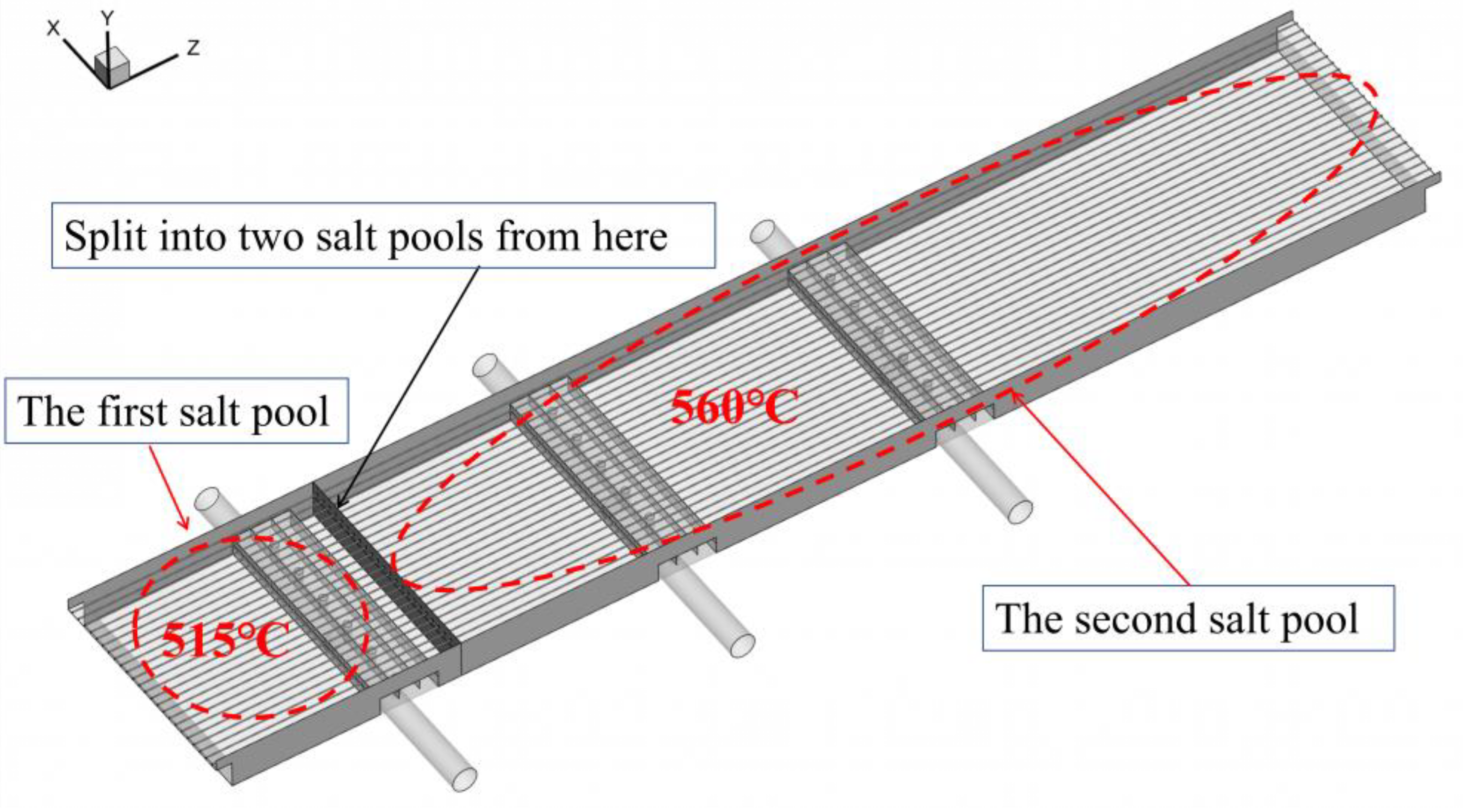
Heat Treat Today's Technical Tuesday feature provides an overview of the heat treatment process and the benefits wrought from heat treating in salt baths. The article also illuminates details to understand part composition and the austempering and quenching process as a whole. Salt Bath Hardening: This process involves heating the workpiece to a high temperature, followed by rapid quenching in a salt bath.
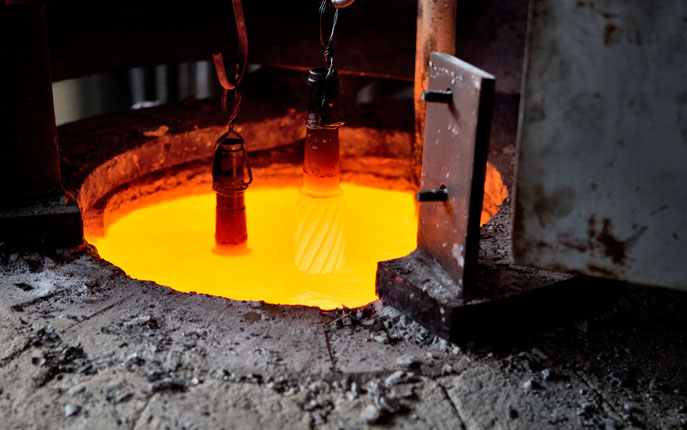
It results in increased hardness and improved wear resistance. At the turn of the 20th century, the use of molten salt as a heating and quenching medium for steels was developed in England. It rapidly came into use in Europe as a low-cost method of heat treating.

Tecma srl
Equipment was inexpensive, and molten salt provided a reproducible method of heat treatment. In this short article I will review the types of salts used for heat treating and some hazards. Using salt baths also helps with controlled cooling conditions during quenching.
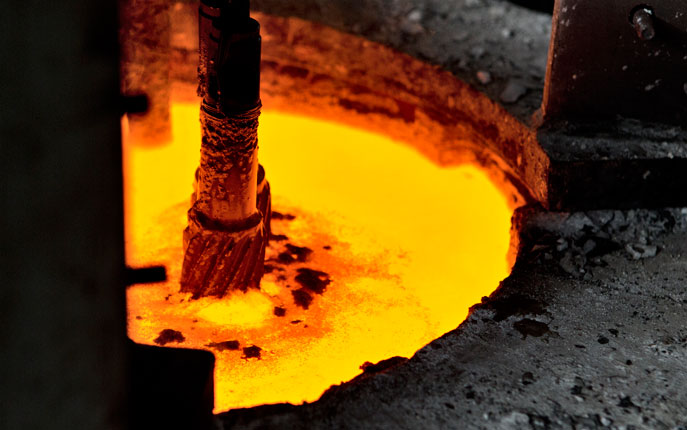
In conventional quenching operations, either water or oil is used as the quenching media, and the high cooling rate provided by water/oil may cause cracks and distortions. Brine Quenching Brine quenching, or salt bath quenching, has the fastest cooling rate. Brine is a solution of water and salt.
Heat treating an anvil sleeve molten salt quenching bath - YouTube
Salts have been used in the quenching process for many of years. They have a wide operating temperature range, and can minimize problems involving iron and steel parts. This is great for materials that have low harden.

Salt bath hardening including quenching in a hot salt bath is used to harden metal while creating only slight warping. The component is heated in a fluid salt melt or quenched in a hot salt bath. The procedure thus extends the cooling time and achieves even heat distribution in the steel, from the edge to the core.
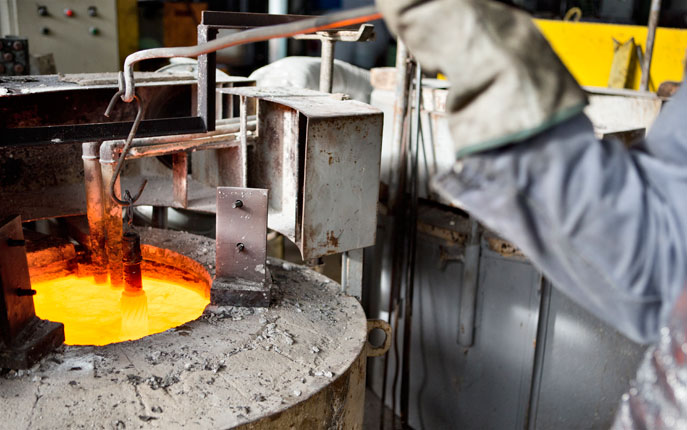
Mar-Ausquenching Salt Bath Furnaces – Upton Industries
This reduces stresses and minimises the risk of crack formation. All processes. Molten salt, including nitrite/nitrate salts, is the quenching medium most commonly used in austempering and marquenching of ferrous materials.

This article describes the use of molten salts in the quenching of ferrous materials. It provides information on the processing and operation of salt quenching including considerations of time, temperature, environment, and safety, as well as critical. A work part immersed into a molten salt is heated by heat transferred by conduction (combined with convection) through the liquid media (salt bath).

The heat transfer rate in a liquid media is much greater than that in other heating mechanisms: radiation, convection through a gas (e.g., air). Controlled cooling conditions during quenching. Benefits of Quenching in Salt Ajax IQC-IQCR-IQCF quench furnaces combine the proven advantages of salt bath technology with the latest advances in thermal processing, resulting in increased throughput, superior material qualities, and low overall production costs.

Quenching in salt provides excellent temperature uniformity, minimal distortion and protection from cracking, with the ability to. The term "quenching" is a heat treatment process for ferrous materials that improves their physical and mechanical properties by altering their crystalline structure. It involves heating the ferrous workpiece to a high temperature, then quickly cooling it.

The quenching or cooling medium is typically oil or water. However, the Salt Quenching process uses various mixtures of salt bath mediums.